

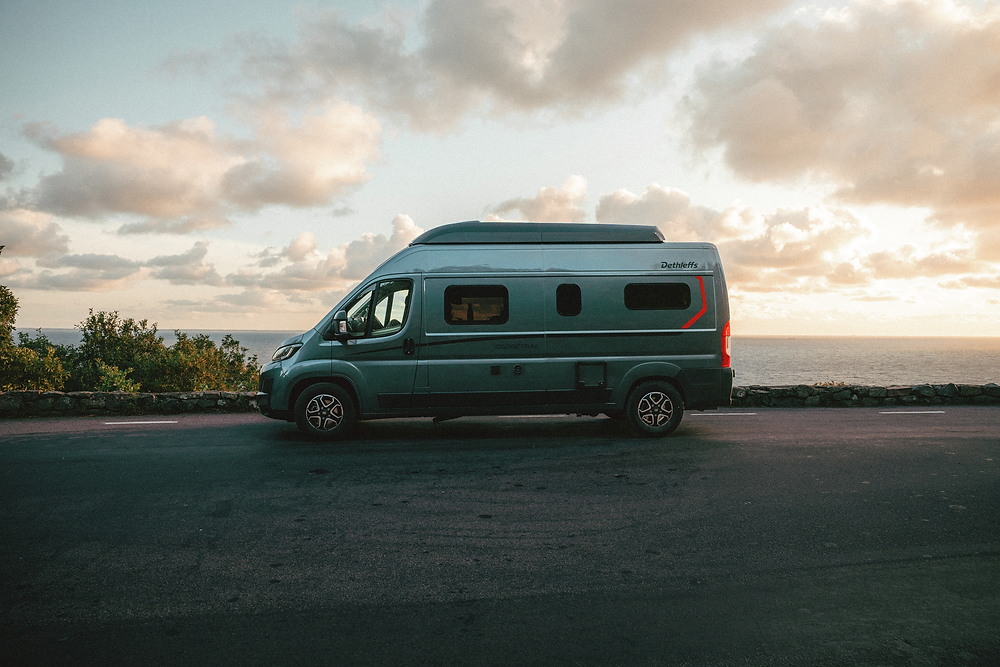
Driving a motorhome in Norway is easier than many visitors expect. The roads are well maintained, traffic is light outside the cities, and a normal car licence (category B) covers most motorhomes up to 3,500 kg. What takes some getting used to are the narrow fjord roads, long tunnels, ferries and strict speed limits.
This guide covers the rules you need to know, what the roads are really like and practical tips for your first Norway road trip.
Quick overview
- Roads: Safe and well maintained, but often narrow and winding
- Difficulty: Easy to moderate in summer, demanding in winter
- Licence: Category B covers vehicles up to 3,500 kg
- Best season: May to September
- Best choice for beginners: A compact motorhome
Is it easy to drive a motorhome in Norway?
Yes, for most drivers it is. If you are used to driving a car, you will quickly feel at home behind the wheel of a motorhome. Main roads are in good condition and traffic is usually light once you leave Oslo, Bergen and the other cities.
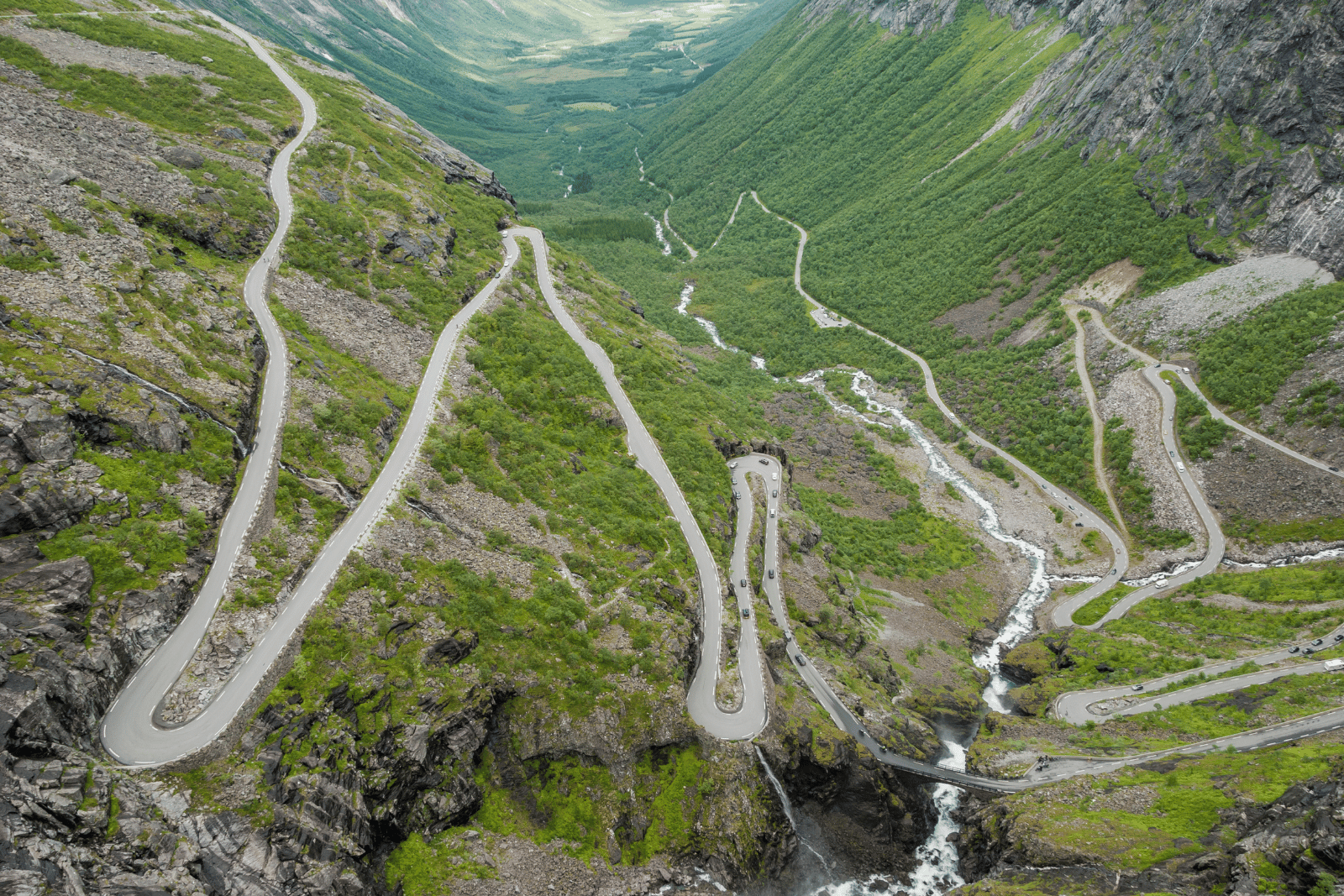
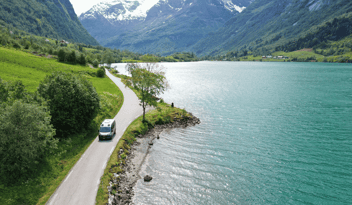
The challenge is the terrain. Many roads follow fjords and climb mountain passes, so they can be narrow, steep and full of bends. A compact campervan is easier to handle on these roads than a large motorhome, which is why many first-timers choose a smaller vehicle. Read more in our comparison of campervan vs motorhome in Norway.
Which driving licence do you need?
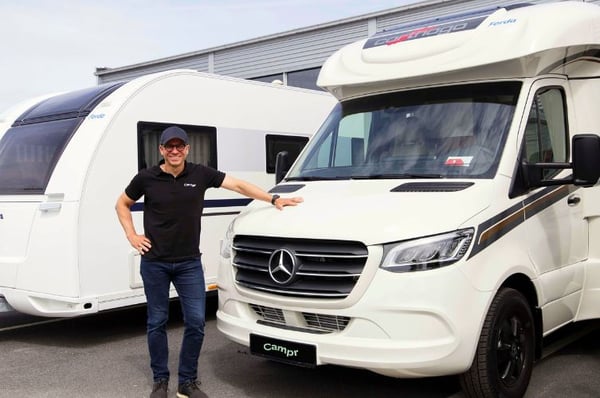
A standard category B licence lets you drive a vehicle with a permitted total weight (tillatt totalvekt) of up to 3,500 kg. Most smaller and mid-sized motorhomes fall within this limit. Heavier motorhomes, between 3,500 and 7,500 kg, require a category C1 licence.
Check the permitted total weight on the vehicle's registration document before you book, not just the size. Licences from EU/EEA countries are valid in Norway. If your licence is from elsewhere, check the rules for foreign licences with the Norwegian Public Roads Administration (vegvesen.no).
Driving rules you must know
- Drive on the right and overtake on the left.
- Seat belts are mandatory for everyone. Passengers should only sit in seats with seat belts while you drive.
- Headlights must be on at all times, day and night.
- Alcohol limit is very low (0.2 per mille), so the safe rule is not to drink at all before driving.
- Give way to the right unless signs say otherwise. This also applies at many smaller junctions.
Speed limits in Norway
- Built-up areas: 50 km/h unless otherwise signed
- Outside built-up areas: 80 km/h unless otherwise signed
- Motorways: often 90–110 km/h, as signed
Speed cameras are common and fines are high, even for small violations. In a motorhome you will rarely want to go faster than the limit anyway: the views are the point.
What are the roads like?
Norway has a mix of smooth main roads, coastal routes and mountain roads. In the fjord regions you will often meet roads where two vehicles cannot pass each other. Use the passing places (møteplasser), which are marked with an "M" sign, and be ready to reverse a short distance if needed.
On steep descents, use a low gear and let the engine brake, so the brakes do not overheat. Mountain passes such as Trollstigen and the road to Geiranger are closed in winter and usually open in late May or June. For the most scenic routes, see our guide to the best motorhome routes in Norway.
Tunnels, ferries and tolls
Norway has many long tunnels, and several fjord crossings are by ferry. A few things to know:
- Tunnels: keep your lights on, keep your distance and never stop inside unless it is an emergency.
- Ferries: most car ferries run frequently and you simply queue up at the quay. Fares depend on vehicle length, so a large motorhome costs more than a compact one.
- Tolls: toll roads are automatic. Your number plate is registered and the bill is sent afterwards, so there are no booths to stop at.
Tips for driving a motorhome in Norway
- Drive slowly on mountain roads and pull over to let faster traffic pass.
- Plan fuel and charging stops: stations can be far apart in rural areas.
- Use a navigation app, but check that the route suits a larger vehicle.
- Take breaks on long days. Distances look short on the map but take longer than you think.
- Check road status on vegvesen.no before crossing mountain passes.
When is the best time to drive?
Summer, from May to September, is the best time for most visitors. Roads are clear, mountain passes are open and the days are long. Winter brings snow, ice and short days, and some roads close completely. If you are new to motorhomes or have little experience with winter driving, choose the summer season.
Where can you park a motorhome?
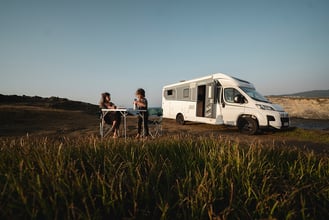
Use designated parking areas, campsites and marked motorhome spots. Many towns restrict parking for large vehicles, so follow local signs. Rules for overnight parking vary from place to place: in some popular areas it is not allowed outside campsites. Always check the signs, leave no trace and empty grey and black water only at proper service points.
Comments