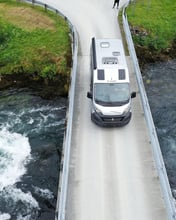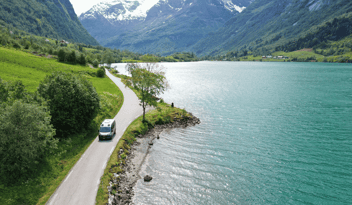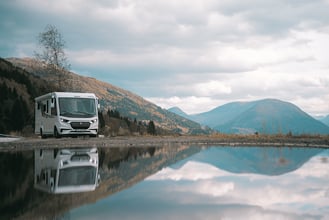

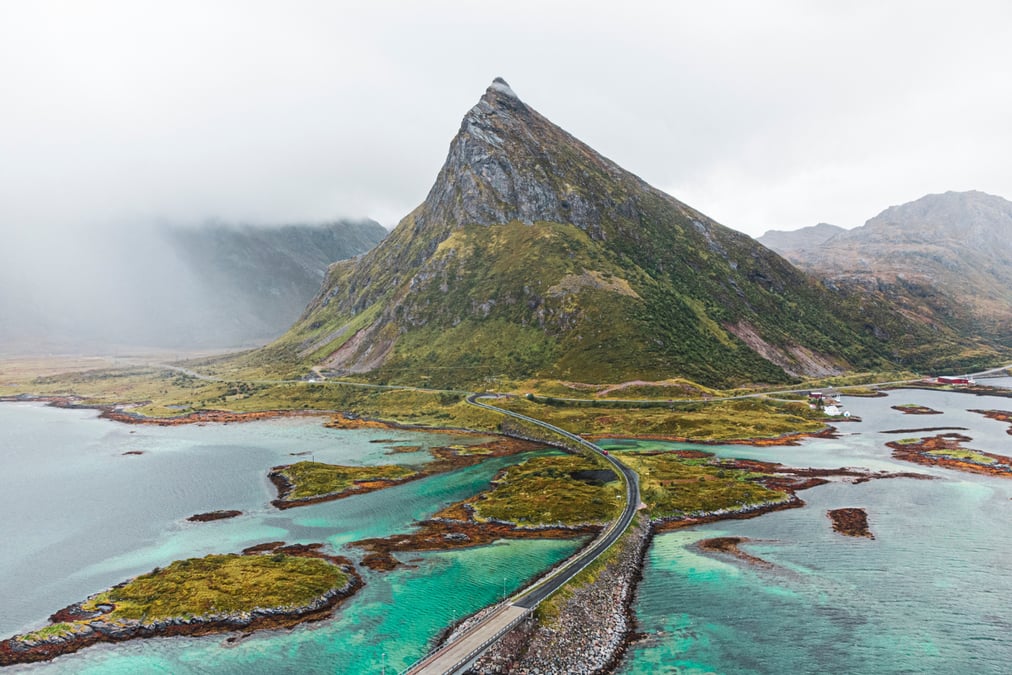
This guide gives you a 7-day core itinerary from Evenes Airport through the heart of Lofoten and back, with an optional 9-day version for couples who want more time. Inside you will find exactly how pickup works at Ferda Evenes with Arctic Vanlife, which vehicles you can choose from, day-by-day route suggestions, honest hiking advice, and practical packing tips for two. Campr connects you with campervan hosts across Norway, and Evenes is one of the most popular pickup areas on the platform.
Key Takeaways: Lofoten Campervan Road Trip
- Fly into Evenes (Harstad/Narvik Airport) and pick up your motorhome from Arctic Vanlife at the Ferda station in Evenes, close to the airport.
- Arctic Vanlife has compact two-person motorhomes, family motorhomes for up to four, classic VW vans and budget options, all drivable on a standard class B licence.
- The 7-day core itinerary covers Svolvær, Unstad, Fredvang, and Reine before returning to Evenes on the final day.
- Overnight parking rules vary by municipality, so check local signs and use established campsites or signed bobilparkering areas.
- A 9-day version adds buffer days for weather delays, rest, and side trips to villages like Henningsvær and Nusfjord.
Your Lofoten Campervan Road Trip at a Glance
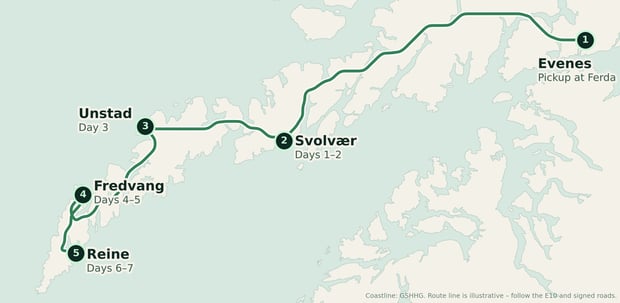
THE ROUTE
Best: Jun–Sep- 1. EvenesStart – pickup at Ferda
- 2. SvolværFløya and Djevelporten
- 3. UnstadArctic surf beach
- 4. FredvangRyten and Kvalvika
- 5. ReineReinebringen and Bunes
- EvenesFinish – return via the E10
Lofoten from Evenes
A round trip from Evenes along the E10 to Reine and back, past Svolvær's harbour, the surf beach at Unstad and the white sand at Kvalvika. Short driving days leave time for a hike or a slow afternoon in a fishing village.
The E10 is the main road through Lofoten, connecting the archipelago from Fiskebol in the east to Å in the southwest. From Evenes Airport, the drive to Svolvær follows the E10 via Lofoten's eastern approach. Check distances and estimated driving times on a route planner before you leave, as conditions vary with weather, road works, and seasonal traffic.
In the 7-day version, you explore Svolvær, Unstad, Fredvang, and Reine, then drive back to Evenes on day 7. The 9-day version adds buffer days for weather, rest, or side trips to places you drove past earlier. You do not need to hike every day. Some of the trip's strongest moments come from a quiet morning parked by the fjord or an afternoon walk through a fishing village.
Starting Your Campervan Trip from Evenes
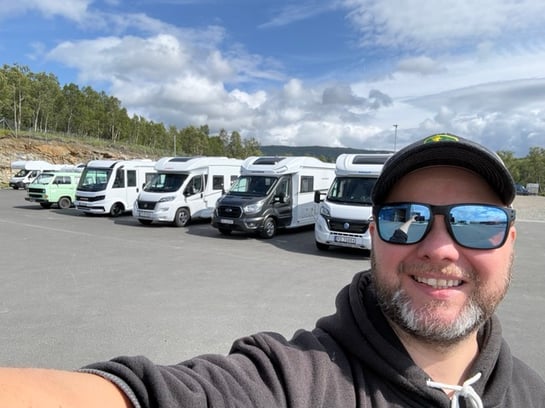
Evenes Airport (Harstad/Narvik, airport code EVE) is the primary airport for travellers heading to Lofoten. The largest host in the area on Campr is Arctic Vanlife, which rents out motorhomes owned by Ferda. You collect your vehicle at the Ferda station in Evenes, a short distance from the airport terminal, so you can land, pick up the motorhome and be on the E10 towards Lofoten the same day.
Picking Up Your Motorhome at Ferda Evenes
Once your booking is confirmed, Arctic Vanlife contacts you in the Campr chat to agree on the pickup time and explain how to get from the terminal to the Ferda station. At the station, a member of the team walks you through the vehicle before you leave: the gas system, heating, water, toilet and how to empty the tanks.
Every Arctic Vanlife motorhome is handed over ready for the road:
- Full diesel tank and one bottle of gas for cooking and heating.
- Fully equipped kitchen with fridge, gas stove, pots, pans, plates, cups, cutlery and utensils.
- Bathroom with toilet and shower, plus heating for colder Arctic nights.
You can add extras when you book: bed linen and towels, outdoor table and chairs, child seats, and Polar Provisions food packs (a Basic or Experience pack with essentials for your first meals) waiting in the van when you arrive. On many listings you can also book early pickup (before 09:00) or late return (after 15:00) if your flight times require it.
Before you confirm, check three things on the vehicle page: the daily kilometre allowance (300 km per day on most of the modern motorhomes), the minimum rental period (typically four to five days), and any mandatory fees such as a final exterior wash or a daily toll and ferry package. All of these appear in the price before you pay, so there are no surprises at the counter. Read our campervan rental guide for more on how booking works.
Which Arctic Vanlife Vehicle Suits Your Trip?
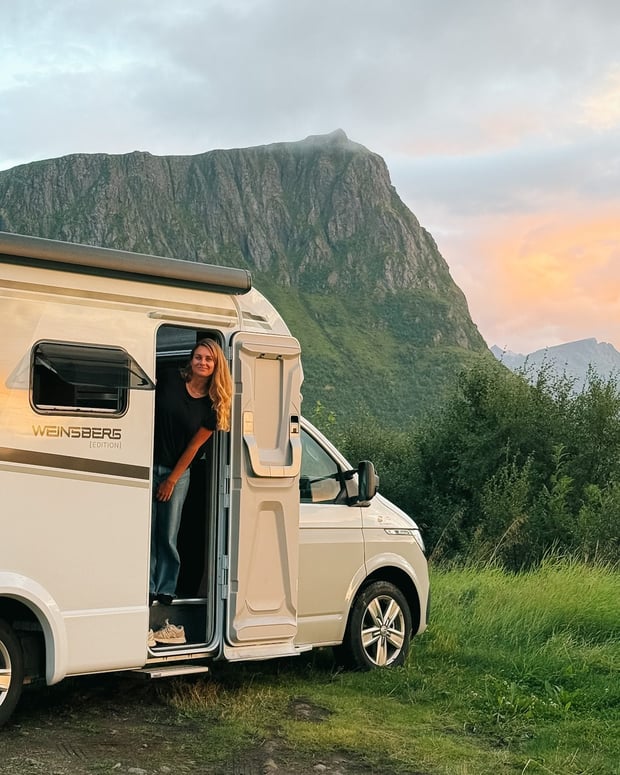
- Compact Tourer (2 people): 2023 to 2026 models from Dethleffs, Weinsberg and Knaus, most with automatic gearbox. The best fit for a couple on this itinerary: enough comfort for a week, and compact enough for Lofoten's narrow side roads.
- Family Tourer (up to 4 seats): Mainly 2023 models from Knaus, Weinsberg and Dethleffs, plus a Rapido, around 7 metres long with automatic gearbox. Choose this for more living space or extra passengers, and check the number of beds against seats, as several models sleep two.
- Freecamp and vintage vans: Classic VW Transporters and Westfalias, plus a Mercedes Marco Polo. Shorter, simpler and manual, with a lot of character. Great for experienced van travellers who want an easy vehicle to park.
- Budget tourers: Older motorhomes from Dethleffs, Knaus, Solifer and Adria at lower daily prices, for travellers who prioritise cost over the newest interior.
All Arctic Vanlife motorhomes weigh 3,500 kg or less, so you can drive them on a standard car licence (class B). Our guide on driving a motorhome in Norway covers the rules and practical road knowledge you will need.
See available Arctic Vanlife motorhomes at Evenes
What to Ask at Pickup
- Vehicle height, length and width: Lofoten has tunnels and narrow road sections. Know your dimensions before you drive.
- Gas system: How to operate the stove and heating safely and where the shutoff valve is located.
- Grey water and toilet: Where to empty tanks along the route and how frequently.
- Return: Agreed return time, fuel level and how the check-out works in the Campr app.
Days 1 and 2: Settle In and Explore Svolvær
Svolvær is the largest town in Lofoten and a natural first base. You will find supermarkets, fuel stations, and harbourside restaurants serving fresh cod and stockfish. Use your first evening to stock up on groceries and get familiar with the campervan before heading into wilder terrain the next day.
On day 2, what you do depends on your energy and the weather. Svolvær is surrounded by steep peaks, and the Fløya trail is a popular first hike. If you want a gentler start, a walk along the harbour and through the centre of Svolvær gives you views of the surrounding mountains and the open Vestfjorden without any climbing.
Hiking Fløya and Seeing Djevelporten
The Fløya trail climbs steeply to around 590 metres above Svolvær. The trailhead is located near Blåtindveien on the edge of town. The path is marked but involves loose rock and exposed sections higher up, so solid footwear with ankle support is recommended. Check the forecast, choose a route that suits both of you, and turn back if visibility or footing deteriorates.
From the upper sections you get a wide view over Svolvær harbour, the surrounding islands, and the open Vestfjorden. Djevelporten (the Devil's Gate) is a large boulder wedged between two cliff faces near the summit ridge. It is a well-known landmark visible from the trail. The rock around it is exposed and the drop beneath the boulder is significant, so admire it from a safe distance rather than climbing onto it.
Day 3: Unstad and the Lofoten Coast
From Svolvær, drive west along the E10 and turn off toward Unstad on the northern coast. Unstad is known for its surf beach, one of the northernmost surfing spots in the world, set in a valley framed by steep mountains. The beach faces the open Norwegian Sea.
You do not need to surf to enjoy Unstad. The beach is worth the drive on its own, with waves rolling in against the headlands. A walk along the coast above the beach gives you a different angle on the landscape. If conditions suit, local operators in the village offer surf lessons and equipment.
The village is small, with no shops or fuel, so fill up beforehand. From Unstad you can also drive to Eggum, further along the northern coast, where a walk takes you past old coastal fortifications and open ocean views. For current activity listings across the islands, check the Visit Lofoten website, which covers hikes and providers throughout the region.
Days 4 and 5: Fredvang, Ryten, and Kvalvika
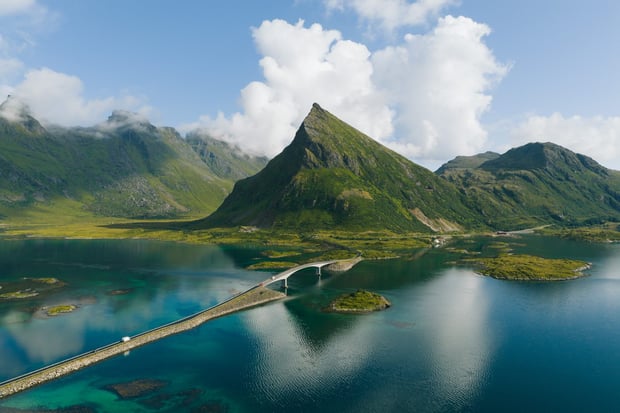
The Fredvang area, reached via the Fredvang bridges off the E10, is one of the most photographed parts of Lofoten. Two popular hikes start from a trailhead near Fredvang: the climb up Ryten and the walk down to Kvalvika beach. Both share the first section of trail before splitting in different directions.
Spreading the two hikes across separate days lets you enjoy each one properly without rushing either. If you are fit and start early, combining them into a single day is possible but makes for a long and tiring outing. Read about summer campervan travel in Norway for more on planning active days around weather and long daylight hours.
Choosing Between Ryten and Kvalvika
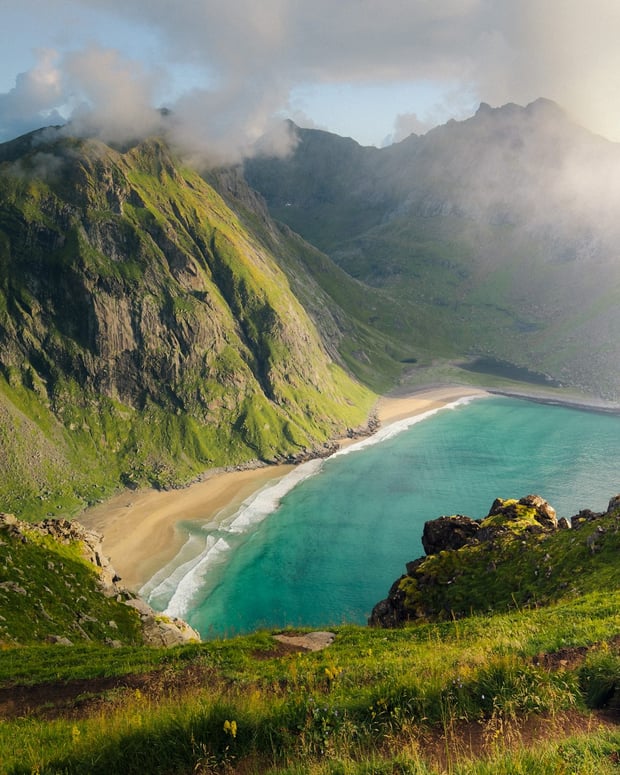
Ryten: The trail climbs to a mountaintop viewpoint looking directly down onto Kvalvika beach far below. The ascent involves boggy ground lower down and steep, rocky terrain near the top. The reward is one of Lofoten's most recognisable views, where turquoise water meets white sand between dark peaks. Allow a full day and start early.
Kvalvika beach: A shorter hike that takes you down to a secluded beach between two headlands. The trail crosses a low pass before descending to the sand. The beach faces the open sea, so swimming is not advisable due to strong currents and cold water. It is a good option if you want to spend time on the beach itself rather than on a summit.
Both hikes involve uneven, rocky ground. Trekking poles help on the steeper descents. If you only have time for one, Ryten offers the panoramic view from above. If you prefer being on the sand, choose Kvalvika.
Days 6 and 7: Reine, Flexible Exploration, and Return to Evenes
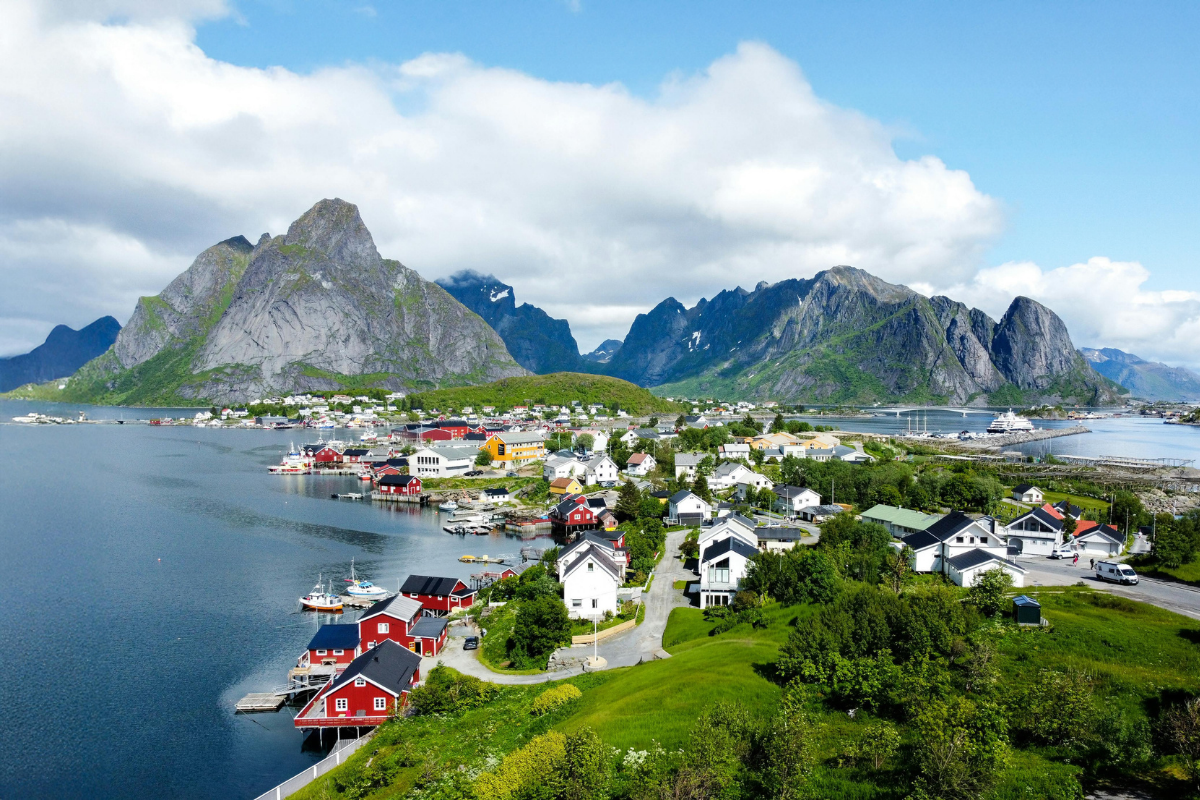
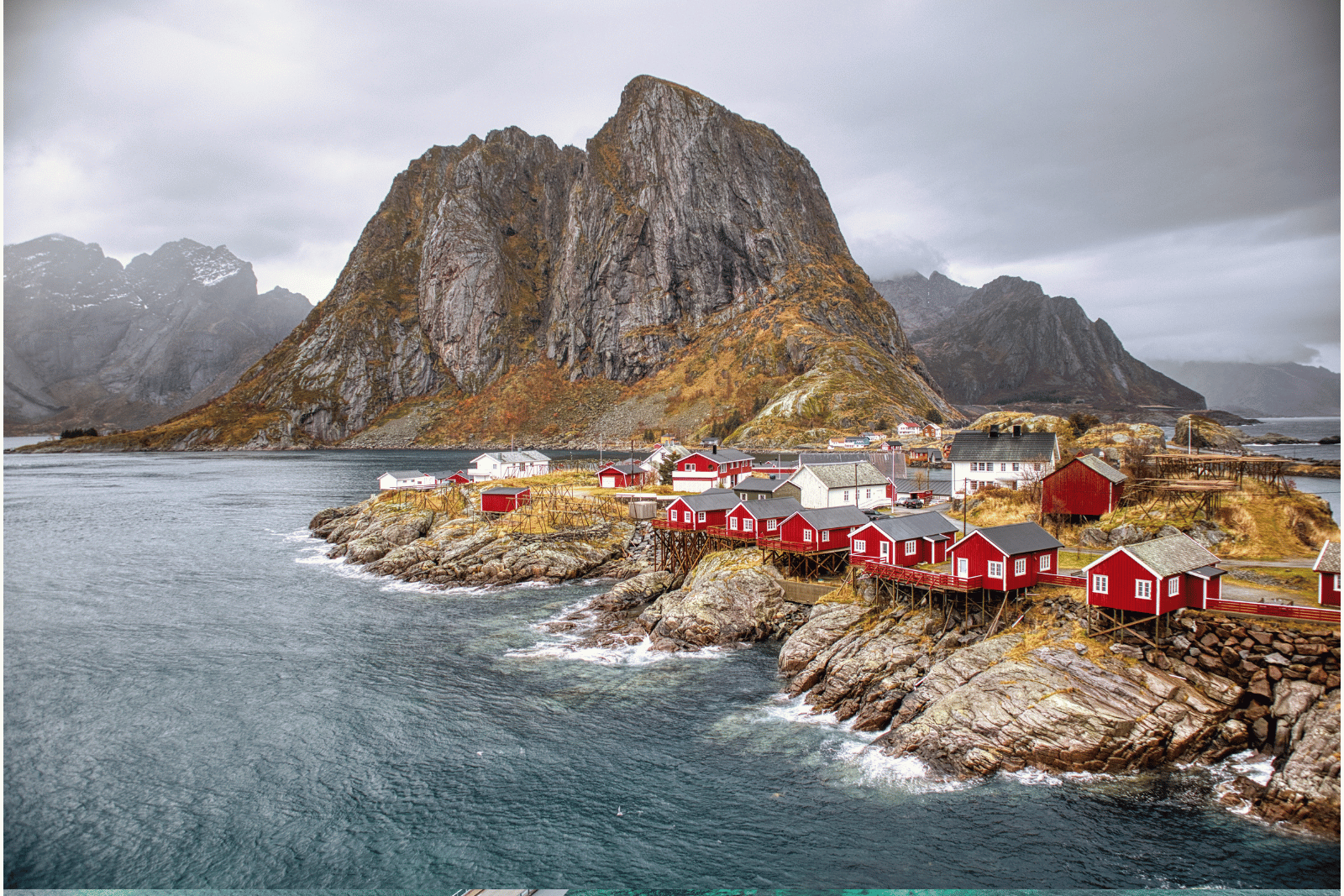
Reine is frequently named among Norway's most scenic villages. Red and white rorbuer (fisherman's cabins) line the waterfront beneath towering peaks. The village has a small shop, a bakery, and a few places to eat. Use Reine as a base for your final full day of exploring before driving back.
Depending on weather and energy, you can hike Reinebringen, take the boat to Vindstad and walk to Bunes beach, or simply enjoy the village and the surrounding fjords at a slower pace. There is no need to rush. On day 7, drive back to the Ferda station in Evenes for your vehicle return. Allow generous time for the drive so you can stop along the way and arrive relaxed for the handover and your flight home.
Planning the Reinebringen Hike
Reinebringen is one of Lofoten's most popular hikes. A stone staircase built by Sherpa teams makes the ascent more structured than it used to be, but the hike is still steep and physically demanding. The view from the top looks straight down onto Reine village and the surrounding fjord system.
There is no parking at the trailhead itself. According to Visit Lofoten's official Reinebringen guide, you park at the designated area at Reine outer harbour, then walk approximately 1.9 kilometres along the road to the start of the stone stairs, which begin outside the Ramsvik tunnel. Follow the old road outside the tunnel, not through it. Stay on the staircase and do not continue onto exposed terrain beyond the maintained route. Avoid the hike in snow or ice. Start early to avoid midday crowds. In wet conditions, the stone steps become slippery and the exposed upper sections can be dangerous. Check the weather forecast before you commit to this hike.
Bunes Beach by Boat and on Foot
Bunes beach sits on the ocean-facing side of the mountains behind Reine. You reach it by taking a boat from Reine harbour to Vindstad, then walking across a low pass to the beach. The walk from Vindstad to Bunes is mostly straightforward after an initial climb over the pass.
Boat schedules change by season. Check the current timetable with the local operator or tourist information in Reine before you plan your day. The last boat back sets your deadline, so plan backwards from the return departure time. Bunes is a wide, white-sand beach backed by steep cliffs. Bring layers, water, and food, as there are no facilities on the beach.
Days 8 and 9 (Extended Version): Weather Buffer and Side Trips
If you have 9 days instead of 7, use the extra time for weather flexibility, rest, or places you drove past earlier. Lofoten weather changes quickly, and having buffer days means a rained-out hike can move to a clearer morning without cutting something else from your itinerary.
Henningsvær is a compact fishing village spread across small islands, worth a half-day visit for its galleries, harbour, and the football pitch wedged between rocks and sea. Nusfjord is one of Lofoten's oldest preserved fishing villages and offers a short walk among the historic harbour buildings.
In the 9-day version, you return to Evenes on day 9 instead of day 7. This removes the need to rush and lets you adjust the itinerary as conditions change. Place the extra days within the route, before your final return, rather than adding more driving after reaching Reine.
Driving a Campervan in Lofoten
The E10 through Lofoten is mostly a standard two-lane road. Some sections are narrow, particularly on bridges and through older stretches, so pay attention to oncoming traffic. Side roads to beaches and trailheads can be tighter still. Ask your host which roads suit the dimensions of your specific vehicle before heading off the main highway.
Speed limits are typically 80 km/h on the E10 and lower through villages. Sheep wander onto the road in summer, so keep your speed down and stay attentive. Fuel stations are in the main towns along the E10, including Svolvær and Leknes. Fill up when you see one, because the gaps between them can feel long when you are stopping frequently for walks and photographs.
For the full picture on Norwegian road rules, toll systems, and route planning across the country, browse the driving and route guides in our Stories section.
Where to Stay Overnight in a Campervan in Lofoten
Norway's right to roam (allemannsretten) allows tent camping on uncultivated land at a distance from buildings, but it does not automatically grant the right to park a motorhome overnight anywhere you choose. Overnight parking rules for campervans vary by municipality and by location. Some roadside areas allow it; others restrict it. Always check the signs where you park and follow any municipal regulations that apply.
The simplest and most reliable approach is to use established campsites or signed motorhome parking areas (bobilparkering). One named campsite to investigate for the western part of your route is Ramberg Resort. Confirm opening dates, pitch availability, vehicle suitability and facilities directly before relying on a stop:
- Ramberg Resort campsite in Ramberg. Use the official campsite page to check the practical details and contact the operator before reserving your overnight stop.
Additional campsites exist along the E10 near Kabelvåg, Leknes, and Å. Ask at tourist information offices on arrival for current availability and any seasonal openings. Some landowners also allow overnight parking for a fee. Always confirm permission before staying on private property.
What to Pack for an Active Campervan Trip for Two
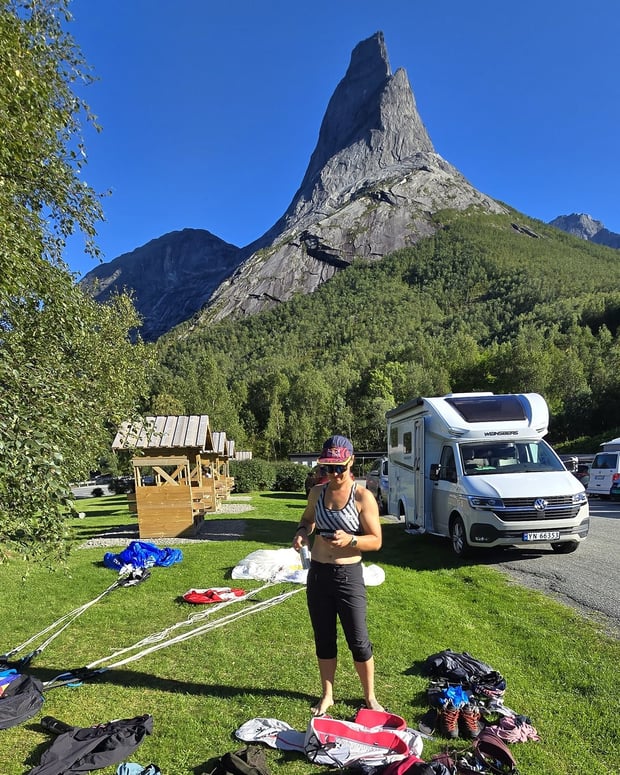
Packing for two people in a campervan means balancing outdoor gear with limited storage. Arctic Vanlife motorhomes come with a fully equipped kitchen, and bed linen, towels and outdoor furniture can be added when you book. Here is what to bring yourself, focused on what the vehicle does not include.
Clothing and Layers for Lofoten Hiking
- Waterproof jacket and trousers: Rain can arrive without warning, even on clear mornings. A wind-resistant outer layer is essential on exposed ridges.
- Hiking boots with ankle support: Lofoten trails are rocky, often wet, and uneven. Boots with good grip make a noticeable difference on steep ground, particularly on descents from Ryten or Reinebringen.
- Base layers (merino or synthetic): Summer weather in Lofoten can be cool, and wind at altitude makes layering important.
- Warm mid-layer (fleece or insulated jacket): For evenings and rest stops on exposed ridges where the wind picks up.
- Sun protection: Hat, sunglasses, and sunscreen. Summer daylight hours in Lofoten are long; daylight does not remove the need to rest or check weather conditions.
Hiking and Outdoor Gear
- Trekking poles: Helpful on steep descents like Ryten and Reinebringen, where rocky ground and wet conditions make poles a genuine safety aid.
- Day pack (25 to 30 litres per person): For water, snacks, extra layers, and a basic first-aid kit. Both of you should carry your own supply for a full day out.
- Headlamp: Bring a light for reduced visibility and trips outside midsummer. Follow signed pedestrian routes and do not assume road tunnels permit safe walking.
- Reusable water bottles: Tap water in Norway is clean and safe to drink. Carry enough water for each hike from the campervan rather than counting on finding water along the trail.
Campervan Essentials to Sort Before You Fly
- Bedding and towels: Add them as an extra when you book, or bring your own.
- Outdoor table and chairs: Available as an optional extra on the vehicle page.
- First groceries: Order a Polar Provisions pack so food is waiting in the van, or stop at a supermarket on your way out of Evenes.
- Waste bags and recycling: Norway has strict waste sorting. Ask at pickup how to sort correctly throughout the trip.
Plan Your Lofoten Trip with Campr
A campervan road trip through Lofoten gives you the freedom to wake up next to a fjord, hike a mountain, and park at a new beach by evening. With Arctic Vanlife at Ferda Evenes, you land at Evenes, collect a fully equipped motorhome a short distance from the terminal, and start driving towards Lofoten the same day. Every renter is verified through Campr, and payment is handled securely online.
If you are deciding between vehicle types, our comparison of campervans and motorhomes in Norway covers the practical differences in space, driving, and cost. And if this is your first time renting, our guide on motorhome rental in Norway walks you through the booking process step by step.
Ready to plan your trip? Find a motorhome at Evenes for your Lofoten adventure
God reise!