

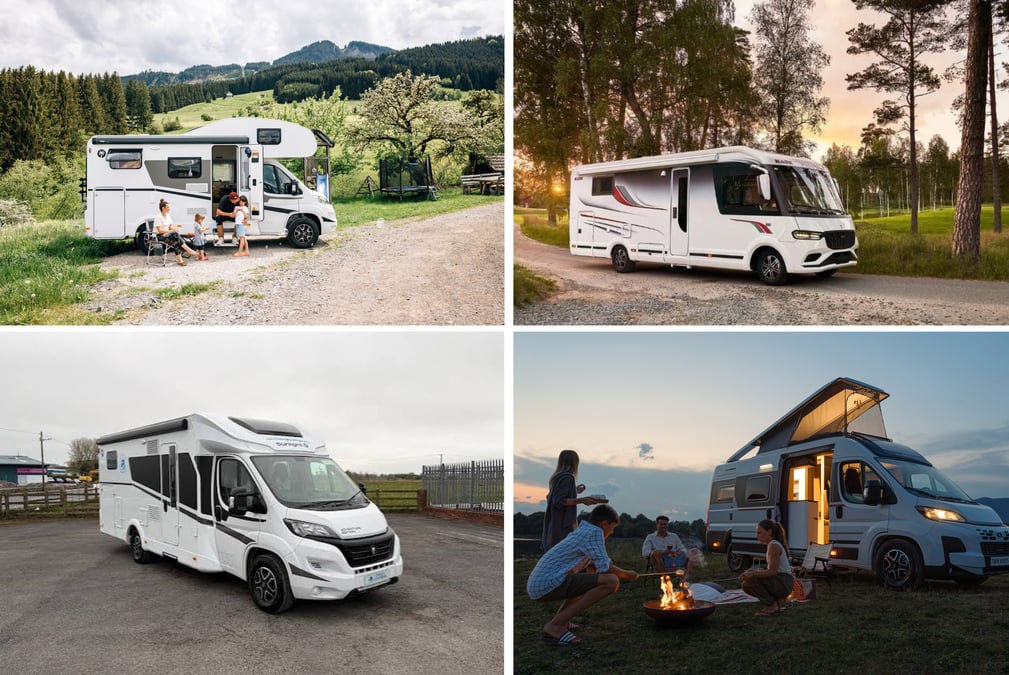
For most trips in Norway, a campervan is the better choice: it is easier to drive on narrow fjord and mountain roads, simpler to park and uses less fuel. A motorhome makes more sense for families and longer trips, when space, a proper bathroom and more beds matter more than easy driving. The right choice depends on how many you are, how long you travel and where you are going.
In this guide we compare campervan and motorhome rental in Norway so you can choose the best option for your road trip.
Quick overview
- Campervan: Best for couples, flexibility and lower running costs
- Motorhome: Best for families, comfort and long trips
- Norwegian roads: A campervan is easier on narrow and winding roads
- Driving licence: Category B covers vehicles up to 3,500 kg
What is a campervan?
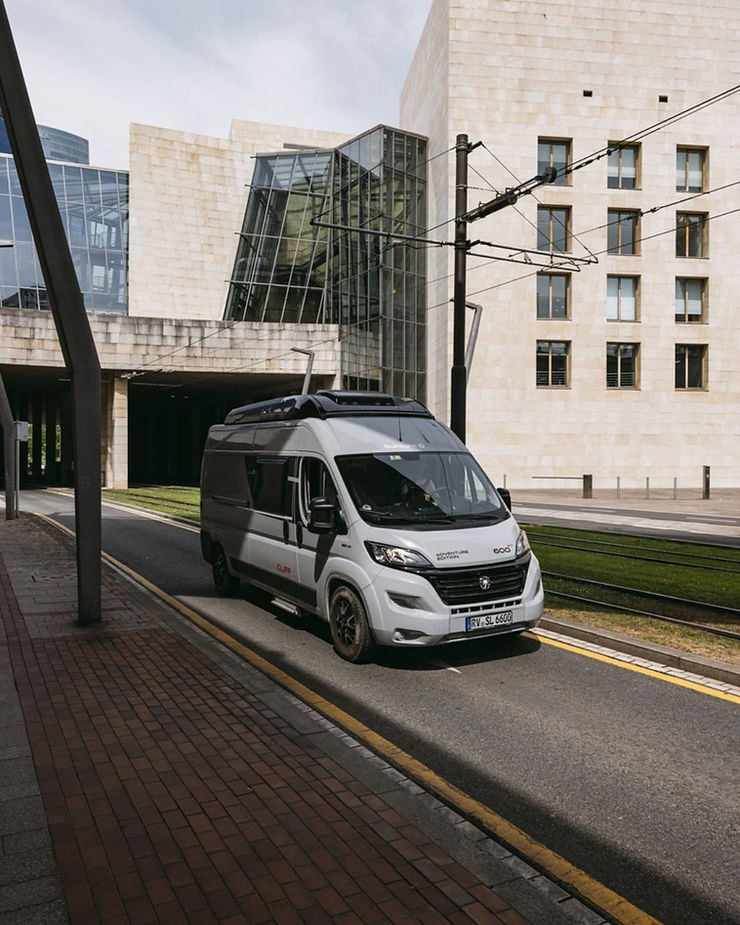
A campervan is a van converted for travel and simple living, usually with a bed, a small kitchen and storage. It is one of the most popular choices for a campervan rental in Norway, especially for couples and solo travellers.
Campervans are easier to drive, park and manoeuvre on narrow mountain roads and coastal routes. They suit travellers who value flexibility and simplicity over maximum comfort. Some have a small toilet, but many do not have a full bathroom.
Key features:
- Compact size, similar to a large van
- Easy to drive and park
- Lower fuel consumption
- Mainly built for 2 people – up to 4 with a pop-up roof
What is a motorhome?
A motorhome is a larger vehicle built for living on the road, with more space and better facilities. A motorhome rental in Norway is a good fit for families or groups who need more room and convenience.
Motorhomes usually have fixed beds, a separate bathroom with toilet and shower, more storage and a bigger kitchen. That makes them comfortable for longer trips. They come in three main types – semi-integrated, integrated and over-cab – described below.
Key features:
- Larger living space
- More comfort and storage
- Sleeps 2–7 people, depending on type
- Better for long-distance travel
Types of motorhome
Motorhome is a broad term. In Norway you will mainly find three types, and the biggest difference between them is how many people they sleep:
- Semi-integrated (delintegrert): Built on a standard van cab, with a lower profile and good driving characteristics. Some layouts sleep 2, others 4 – check the number of beds before you book.
- Integrated / A-class (helintegrert): The cab is built into the living area, giving a large windscreen and the most space inside. Usually sleeps 4, with extra room to move around.
- Over-cab / alcove (alkove): Has an extra double bed above the cab. The choice for big families, with sleeping places for up to 7 people.
For comparison, a campervan is mainly built for 2. Models with a pop-up roof (hevetak) can sleep up to 4.
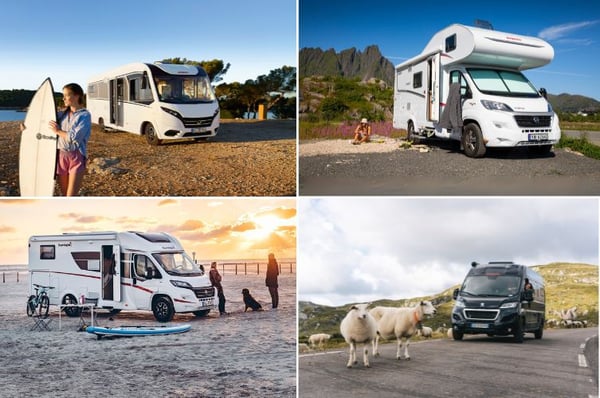
Campervan vs motorhome: key differences
| Feature | Campervan | Motorhome |
|---|---|---|
| Size | Compact | Large |
| Sleeping places | Mainly 2 (up to 4 with pop-up roof) | 2–7, depending on type |
| Driving | Easy | Moderate |
| Parking | Fits most car parks | Needs larger spaces |
| Fuel cost | Lower | Higher |
| Ferry fare | Often under 6 m – lower fare | Often over 6 m – higher fare |
| Comfort | Basic | High |
| Bathroom | Often none or very small | Usually toilet and shower |
| Best for | Couples, solo travellers | Families, groups |
Which is better for Norwegian roads?
Norway has narrow mountain roads, coastal roads with tight bends and many ferry crossings. On these roads a campervan is easier to handle. Meeting oncoming traffic on a single-lane road with passing places (møteplasser), driving through small villages and finding parking at popular viewpoints are all simpler in a smaller vehicle.
A motorhome works fine too, but requires more careful driving, especially on steep descents and in tight bends. Some mountain roads, such as Trollstigen, may have length restrictions for large vehicles. For beginners, we recommend a campervan or a small motorhome. Read more in our guide to driving a motorhome in Norway.
What driving licence do you need?
A standard category B car licence allows you to drive a vehicle with a permitted total weight of up to 3,500 kg. Almost all campervans and many smaller motorhomes are within this limit. Larger motorhomes between 3,500 and 7,500 kg require a category C1 licence, according to the Norwegian Public Roads Administration (vegvesen.no).
Always check the permitted total weight on the registration document before you book. Passengers, water, gas and luggage all count towards the limit.
Cost comparison
A campervan is usually cheaper to rent than a motorhome, and it uses less fuel. A motorhome costs more per day and per kilometre. On the other hand, a motorhome sleeps more people, so for a family the cost per person can be similar. Prices vary with season, size and owner, so compare a few options for your dates.
Ferry fares: every centimetre can count
Norwegian ferries charge by vehicle length, in length bands – typically up to 6 metres, 6–7 metres, 7–8 metres and so on. That means a 6.20-metre motorhome falls into a more expensive band than a 5.99-metre one, even though the difference is only a few centimetres. Many campervans stay under 6 metres, while most larger motorhomes are longer.
If your route includes many crossings, for example along the coast or in Fjord Norway, the difference adds up over the trip. Check the exact length in the listing or registration document before you book, and remember that a rear bike rack or roof box can make the vehicle longer.
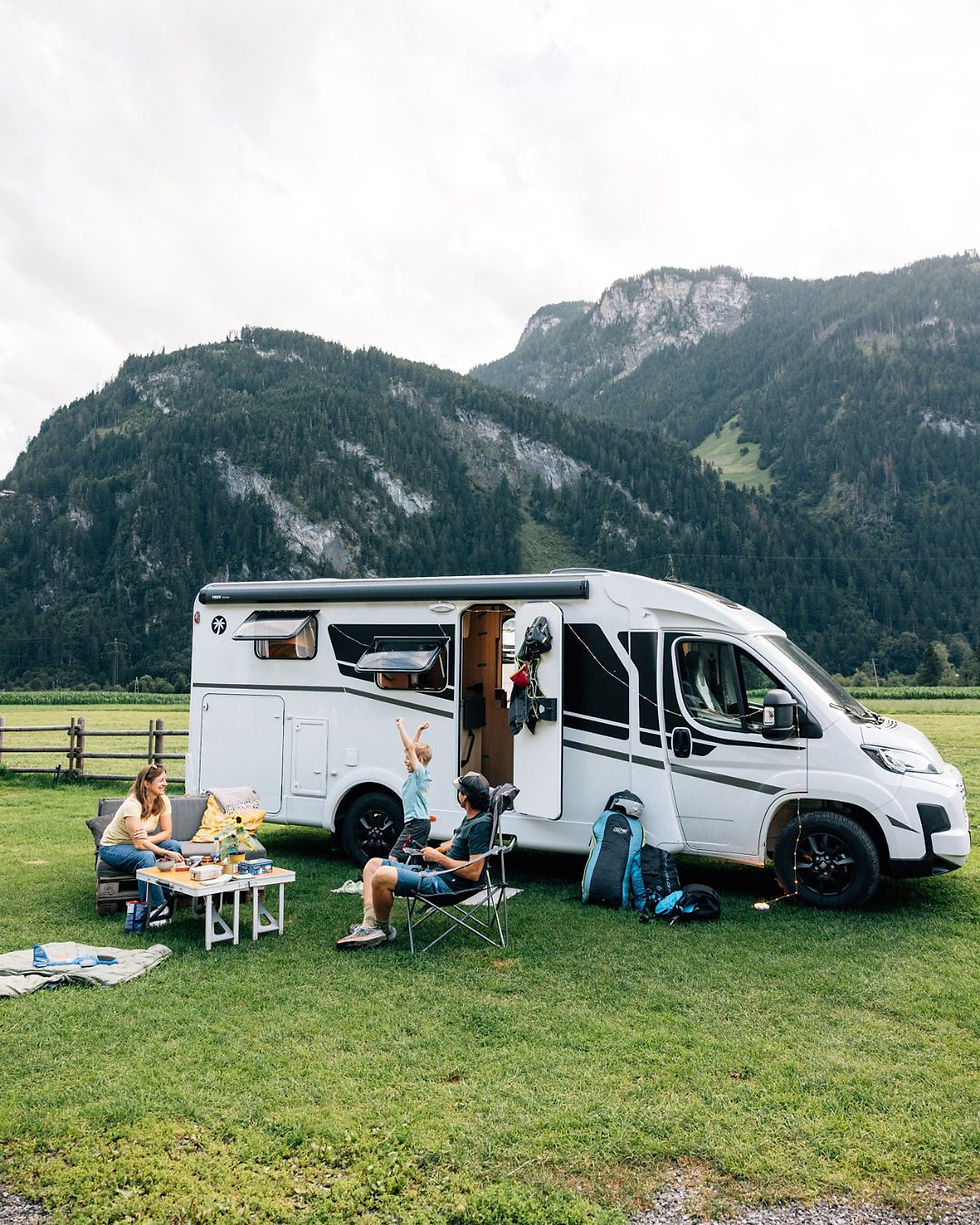
Which one should you choose?
Choose a campervan if:
- You want flexibility and easy driving
- You are travelling as a couple or alone
- You want to keep costs down – on ferries too
- You plan to drive many mountain and fjord roads
Choose a motorhome if:
- You are travelling with family or a group – an over-cab for big families, an integrated model for the most space
- You want more comfort and your own bathroom
- You are on a long trip and will spend time inside
Whichever you choose, our guide to the best motorhome routes in Norway will help you plan where to go.
Comments